
‘We are the kingmaker’: Foxconn shows off EV potential to local, international delegates
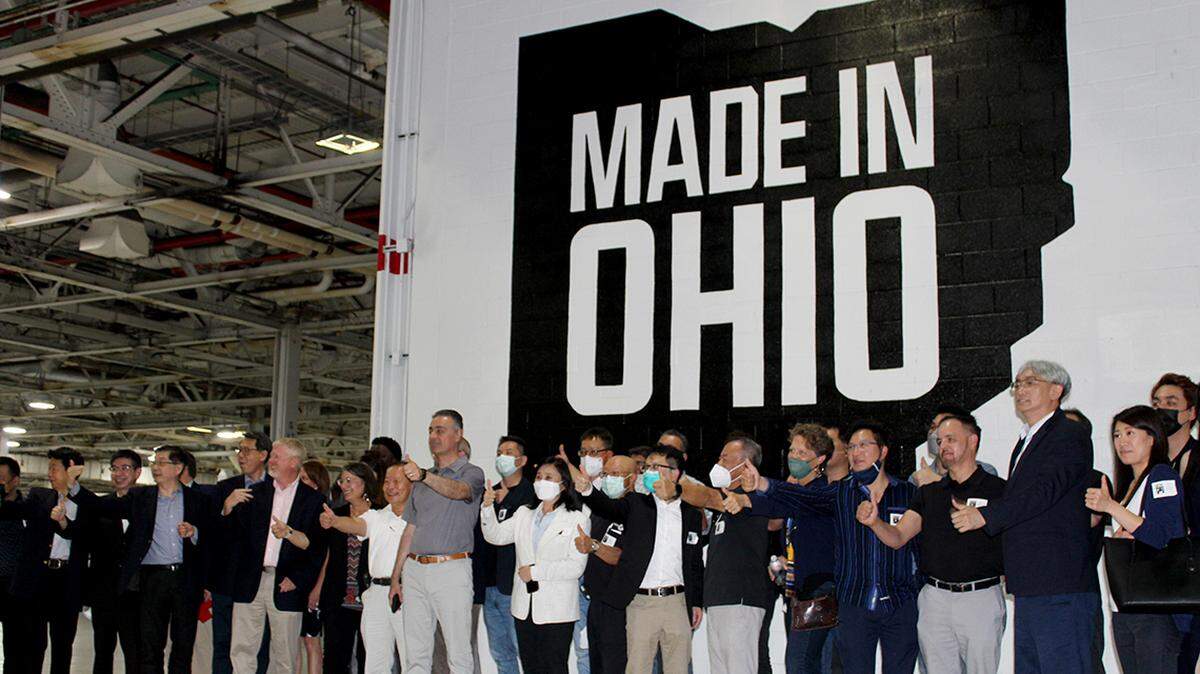
At least two electric vehicle models are expected to begin rolling off the line at Foxconn’s vehicle assembly plant in the village by the end of 2024.
The plant’s new owner, Foxconn Technology Group, is now courting other partners to develop new electric cars on its open EV platform, but Jerry Hsiao, Foxconn’s chief product officer, isn’t yet ready to say who.
An open house Wednesday at the plant spotlighted the Taiwanese mega-manufacturer’s MIH platform — or “Mobility in Harmony” — which it launched in October 2020 as the basis for new electric vehicles to be made at the plant, and showed what the plant is capable of.
They’re looking for the next big thing in EVs, and it could turn the Mahoning Valley into an electric vehicle manufacturing hub, the company said Wednesday.
“It’s Foxconn’s job to create a broader supply chain,” Hsiao said. “We are no ‘king.’ We are no ‘brand.’ But we are the kingmaker.
“We are looking for the new product to dominate the electric vehicle segment not only in the U.S. but also in the global market — and we will put resources behind it.”
‘Back into its prominence’
State and local officials on Wednesday toured the Hallock Young Road facility — which Foxconn officially purchased in May for $230 million — mingling with dozens of delegates from the U.S. and Taiwanese embassies and supplier companies.
“We see Taiwan has a footprint in Ohio’s auto industry,” said Johnson Chiang, director general of the Taipei Economic and Cultural Office. “Not only for Foxconn, but also for Taiwan companies — to invite them over here.”
Chiang said the region’s strengths lie in its bipartisan support for business, its universities that can train the talent needed for the electric vehicle industry and “a great talent pool.”
“My impression is very good,” Chiang said.
Any new investment would drive growth at the plant and grow local jobs, said Dana Saucier, vice president and head of economic development at JobsOhio, the state’s private economic development arm.
“Ohio’s got a long history in automotive production,” he said.
It’s the nation’s top producer of combustion engines and the No. 2 producer of transmissions, and its auto industry employs about 100,000 workers, Saucier said. He estimated 70% of the industry’s supply chain is within a day’s travel of Ohio. That legacy aside, he said the state recognizes the need to nurture the automotive industry’s transition to electrification.
“We are excited to see this facility come back into its prominence. We’re excited for ‘Voltage Valley’ to develop here,” he said.
What’s already in the pipeline
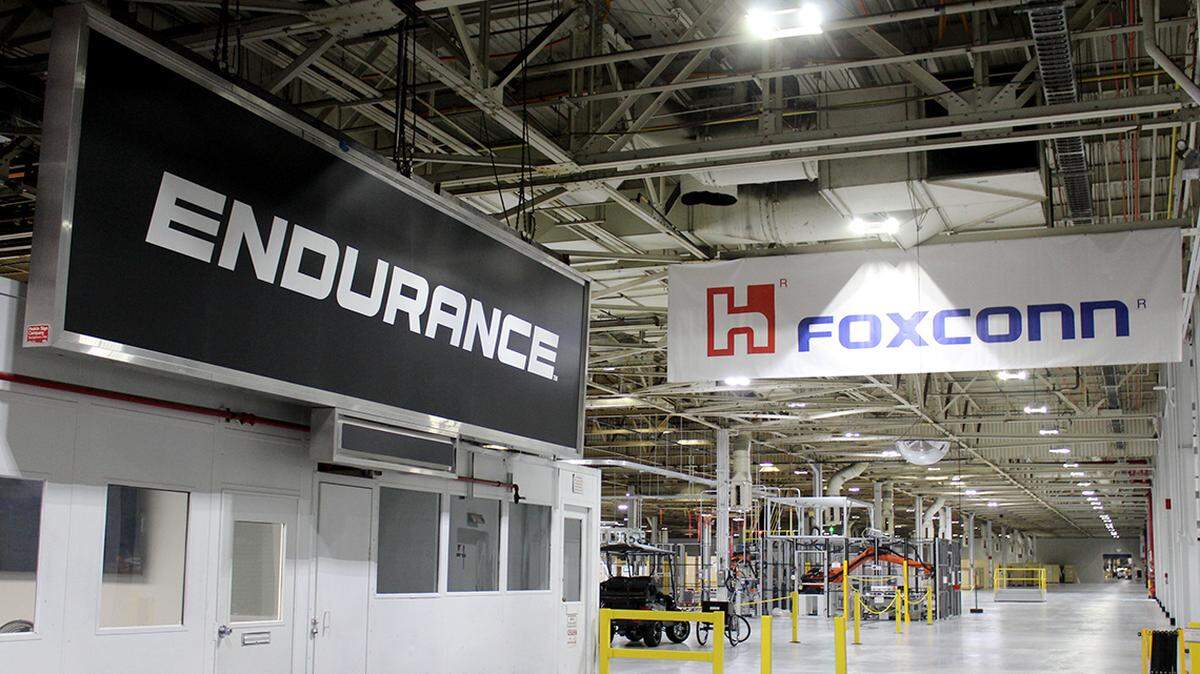
Lordstown Motors’ all-electric Endurance pickup truck is slated to begin producing its first 500 units in the third quarter of this year, and they’ll head to market in the fourth quarter, said Edward Hightower, president of Lordstown Motors and CEO of the company’s MIH joint venture with Foxconn.
Lordstown Motors took the plant over from General Motors in November 2019, and much of its 6.2 million square feet remains unused. Under its joint venture agreement with Foxconn, it now leases its space — a model which could be replicated with other electric vehicle producers that want to build on Foxconn’s open platform.
Jack Cheng, CEO of the MIH Consortium, said the platform is agnostic, meaning “you can put different chips underneath it and you can swap it.”
The consortium has attracted about 2,300 strategic partners from across the globe to work on next-generation technology in electric vehicles, autonomous driving and mobility services, according to the company, and Cheng said 300 other partners are “joining the party right now.” Together, they’ll develop the supply chain and be able to weather issues like the ongoing shortage of semiconductors, he said.
With a plant of such size, capable of churning out 400,000 vehicles a year, “one OEM doesn’t have to fill that on their own,” Hightower said. Using the same tuned and tested components — like battery packs, electronics and suspension — also saves time.
“One thing about having a common architecture that can be used by multiple [original equipment manufacturers] — the benefit of that is you could get scale, and you don’t have to do it all yourself,” Hightower said. “You can develop other vehicles or variants of that platform much faster and at lower cost. That’s going to be an advantage for Foxconn in this plant, of the MIH platform and for us as a smaller, fleet-focused OEM.”
Early development work has begun on some of Lordstown Motors’ future models based on that platform, Hightower said.
Meanwhile, the company is still working to raise the “substantial” amount of capital it needs to continue and meet its production targets, executives told investors in May.
“The exciting part about that is as we bring the product into production and as we complete the relationship — the transaction — with Foxconn, Lordstown becomes more of an attractive and investable story,” Hightower said.
“More on that in the future.”
The PEAR, an electric vehicle reportedly priced under $30,000 being developed by Fisker Inc. for production in Lordstown, won’t be based on the MIH platform, Cheng confirmed.
Hsiao told reporters Wednesday that Foxconn expects the plant to be ready to produce the PEAR in the first quarter of 2023, with production beginning in 2024.
Setting up shop
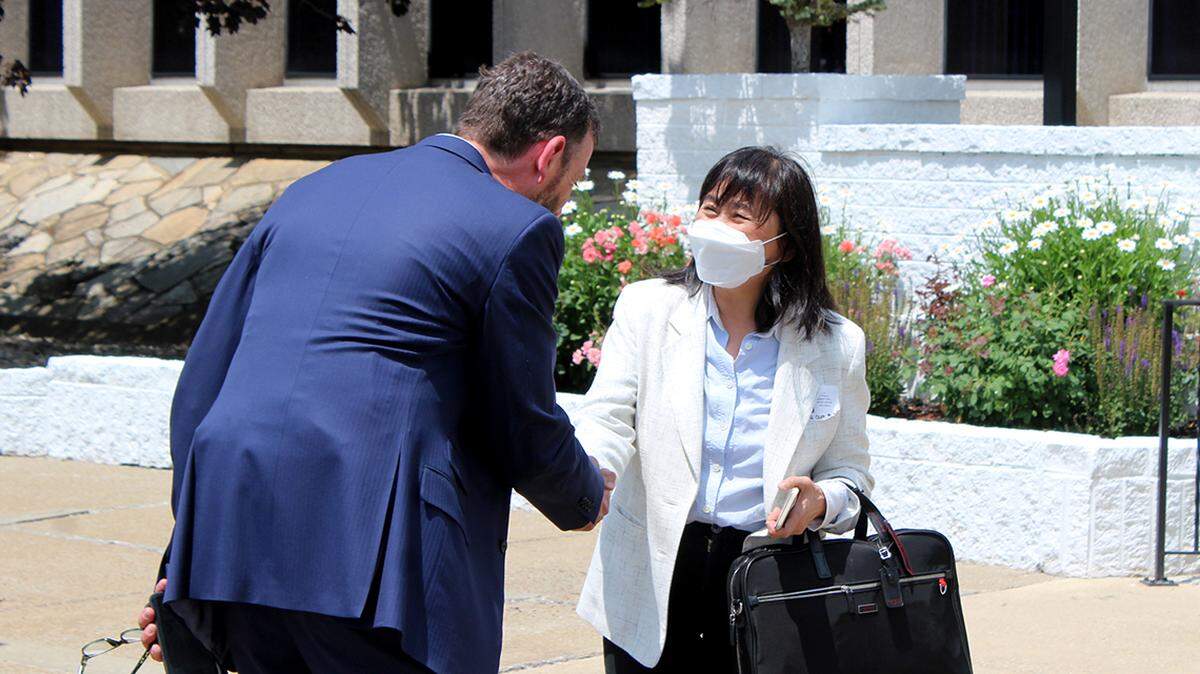
Foxconn’s global operations employ more than 1 million people, Hsiao said.
The former General Motors Lordstown Assembly Complex’s capacity aside, he said the Valley’s experienced automotive workers were the biggest draw.
The area has a workforce that’s 3½ times more specialized in the proper field compared to the national average, according to a study recently published by Cleveland State University.
“People are super important,” Hsiao said. “Of course, this facility is good, but the key reason we acquired this asset is because there are 400 talented and experienced autoworkers [here]. We realize the supply chain and the people in Ohio [are] very good. We’re going to leverage those resources.”
State Sen. Michael Rulli of Salem, R-33rd, said Wednesday he thinks new potential East Asian investors want that experience. They also want infrastructure and a favorable climate for business incentives.
“I think they’re looking to see if the culture of Ohio is gonna be accepting of them to come here — if we’re going to make it easy for them to come here or if we’re going to put hurdles in their way,” he said.
Rulli’s Senate Bill 307, introduced in March, is intended to position Ohio to capture some of the $330 billion worth of investments automakers are expected to make into electric vehicles in the next few years.
“A lot of people, especially these Taiwanese businessmen — they’re looking to [diversify],” Rulli told Mahoning Matters on Wednesday. “They want to invest in America. It should be right here.”
The bill has had three hearings in the Senate’s Energy and Public Utilities Committee, and a fourth is set for when the legislative session resumes in September, Rulli said.
“I think we have the votes out of the Senate. We just have to see what I can do in the House,” he said.
This story was originally published June 22, 2022 at 4:56 PM.